

What if the burnout wasn't a breakdown?

I spent years treating my body like it was getting in the way of my career.
I ignored the migraines and the fact that I was surviving on cold coffee and sheer willpower. I thought I was just "powering through" a busy season, but that season lasted 40 years.
If you’re wondering why you feel "off" even after a weekend away, you’re likely looking for burnout symptoms without realizing because sometimes, they look like a quiet, heavy fog that just won't lift.
What is Burnout, Really?

According to the World Health Organization (WHO), burnout is classified as an "occupational phenomenon" resulting from chronic workplace stress that has not been successfully managed.
It’s a predictable response to sustained overload without recovery.
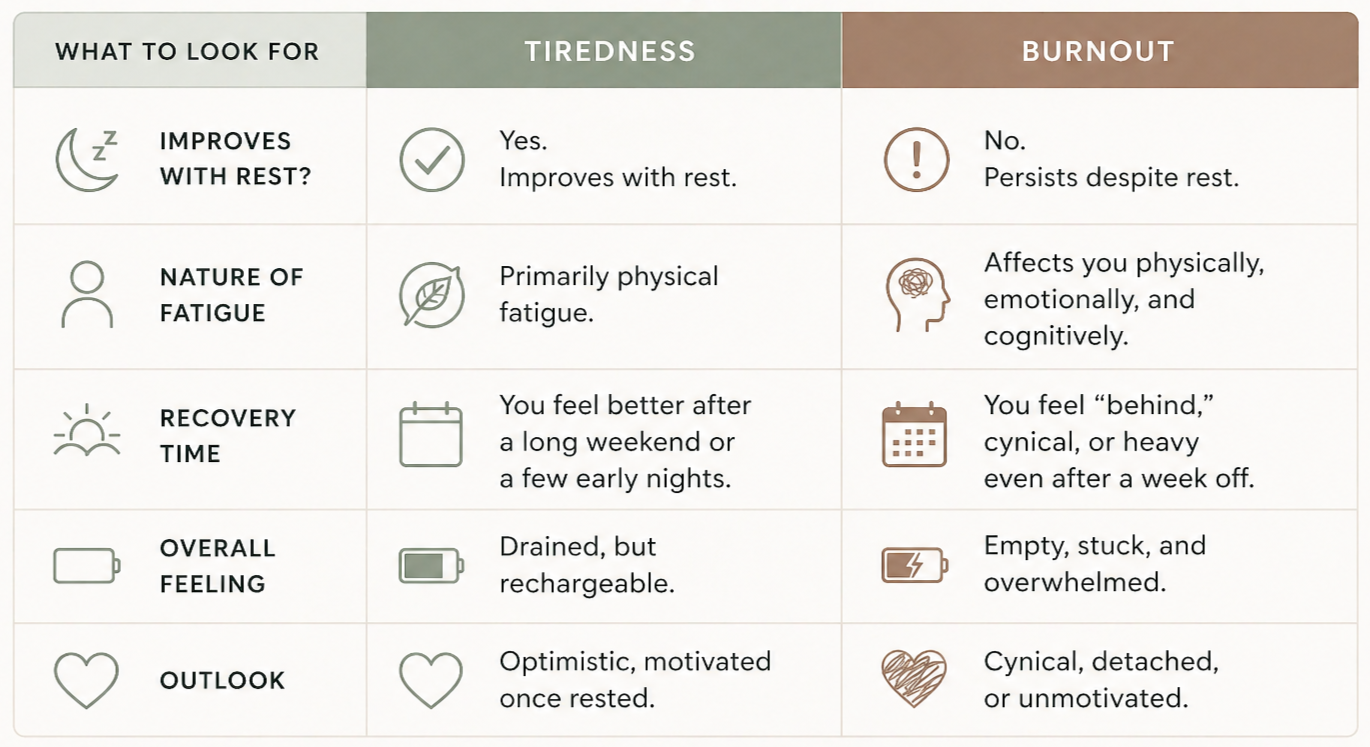
Unlike temporary fatigue, burnout is a nervous system shutdown. It affects your brain’s ability to make decisions, to regulate your mood, and to actually feel rested.
The Science: Why Rest Doesn’t "Fix" It
When you’re under constant pressure, your nervous system becomes dysregulated. This means it stays biased toward a “threat” response even when you are in a safe environment.
This is why rest doesn’t feel restorative: your body hasn't actually switched out of survival mode. You can’t recover until you signal to your system that the emergency is over.
Burnout vs. Tiredness: What’s the Difference?
It’s the question I get most: "Am I burned out or just tired?" Here is the simplest way to tell:
High-Functioning Burnout: The Hidden Version
Many high-achieving women don't realize they're in trouble because they are still "performing." This is often called high-functioning burnout.
Many of these signs of burnout at work are easy to dismiss because you’re still technically functioning. Common indicators include:
You are highly productive but feel deep resentment toward your to-do list.
You can’t relax without a nagging sense of guilt.
You feel emotionally flat or "numb" despite your outward success.
You rely on caffeine, sugar, or sheer pressure just to function.
What Actually Causes Burnout?
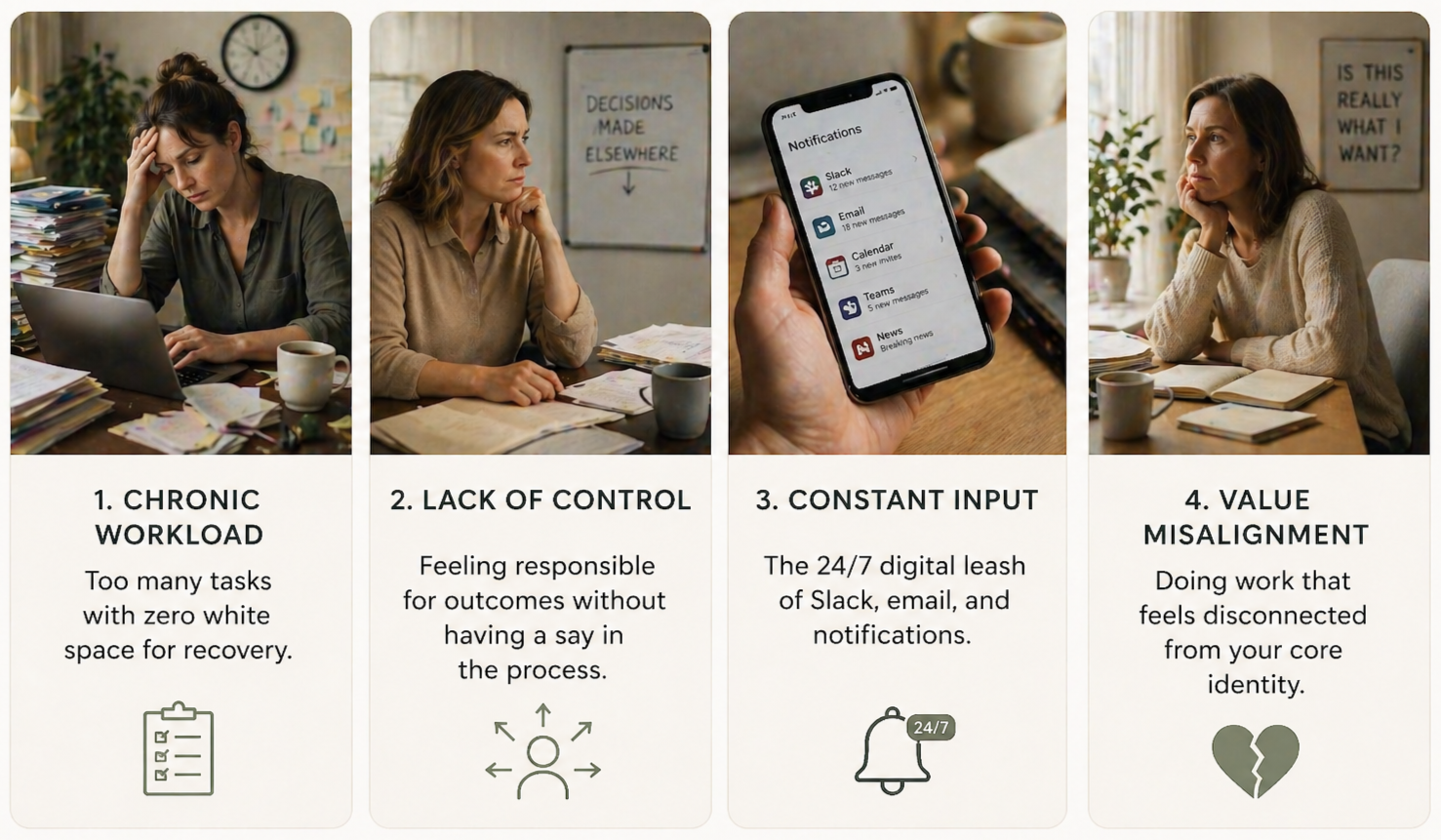
It’s rarely just "working too hard." Usually, it’s a combination of:
Signs You’re Burned Out (Not Just Tired)
Check your recent reality against these signs of burnout:
Rest That Doesn't Restore You
You’re sleeping 8 hours, but you wake up feeling like you got hit by a truck. Your system is too "wired" to actually power down.
Decision Fatigue Over Simple Tasks
Choosing what to eat for dinner or which email to answer first feels like a mountain. When your brain is fried, even tiny decisions feel like a personal attack.
Guilt When You Try to Rest
When you finally sit on the couch, your brain starts a list of everything you "should" be doing.
Physical Symptoms You Keep Ignoring
That permanent stress knot in your shoulder or the headaches that show up every Friday at 4 PM are your body's way of trying to get your attention.
Quick Burnout Self-Check
Do you feel exhausted even after a full night's sleep?
Do small daily decisions feel overwhelming?
Do you feel detached or "numb" to things you used to enjoy?
Do you feel guilty or anxious whenever you aren't being productive?
Do you have recurring physical tension or headaches?
If you checked 3 or more, you are likely dealing with burnout, not just fatigue.
How to Recover From Burnout While Still Working
If you're trying to figure out how to recover from burnout while still working, the goal is to reduce the constant pressure your nervous system is under.
1. Reduce Your Cognitive Load Daily
One thing you can do is to externalize your memory. Write down tasks, ideas, and appointments immediately to free up mental space. Use to-do lists, calendars, and digital apps instead of relying on your brain to remember.
2. Stop Optimizing for Productivity
Focus on capacity, not just your output. Build sustainable energy and focus on what you can maintain long-term rather than just how many tasks you can cram into a day.
3. Regulate Your Nervous System Daily
Aim for 10–15 minutes of low-stimulation activity. A walk without a podcast, sitting in silence, or slow breathing (inhale for 4s, exhale for 6s). These signal safety to your body.
4. Audit Your Energy Leaks
Notice what makes you sigh before you even start it. Identify what is draining you faster than you can refill.
How Long Does Burnout Recovery Take?

Most people underestimate the timeline.
If you've been in a stress cycle for years, your body won't reset in a weekend.
Expect gradual improvement over weeks, not instant relief.
The First Honest Thing Your Body Has Said

You can either listen to your body now or be forced to later.
Before you try to "optimize" your way out of burnout, ask yourself:
What in my life is no longer sustainable, and why am I still trying to maintain it?
"If I were starting fresh today, knowing everything I know now, would I choose to sign up for this again?"
Get your life back
If you’re recognizing these burnout symptoms in yourself, you need your own personalized wellness structure.
We’ll spend 30 minutes untangling the "must-dos" from the "actually-importants" so you can finally stop vibrating with guilt every time you sit down.